Temporary Jobs with No Experience in the UK: How to Get Your First Shift
When your first job seems overwhelming, and all the jobs are looking for experie
August, 27, 2026

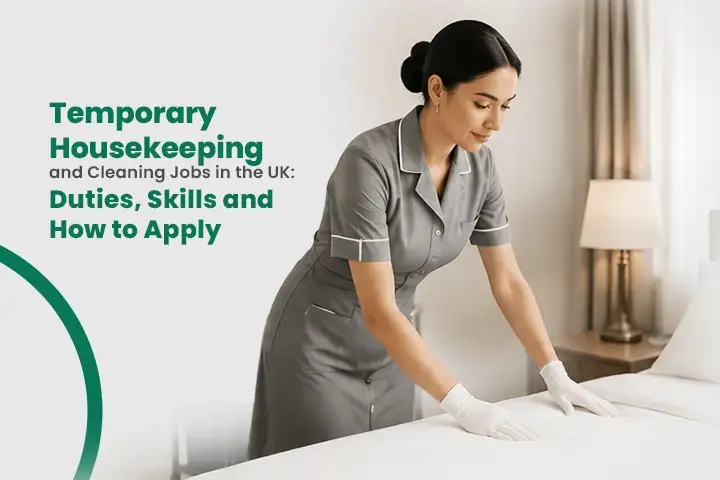
Housekeeping jobs and cleaning jobs can be practical options for people in the UK who want work that fits around studies, family commitments, freelance projects or another job. Opportunities can be found across hotels, hospitality venues, offices, commercial properties and other workplaces that need additional cleaning or housekeeping support.
Unlike a permanent role with a fixed weekly schedule, temporary housekeeping jobs and temporary cleaning jobs may cover individual shifts, seasonal demand, employee absence or short-term increases in workload. This can make the work suitable for people looking for flexible or part-time hours.
Although housekeeping and cleaning often overlap, the responsibilities are not always the same. This guide explains what each role involves, common duties, skills and entry requirements, current UK pay information and how to apply for temporary work.
Temporary housekeeping and cleaning jobs are short-term or shift-based roles that help keep hotels, offices, homes and other workplaces clean, safe and ready for use. Cleaners commonly vacuum, mop, sanitise surfaces, clean bathrooms and manage waste. Housekeepers may carry out those duties while also making beds, replacing linen, preparing rooms, restocking supplies and handling laundry.
Temporary assignments can range from a single shift to several days or weeks, depending on the workplace and staffing requirement. These positions may also be offered as part-time, weekend, evening or seasonal work.
The National Careers Service lists offices, schools, hotels and hospitals among the common workplaces for cleaners, while hotel housekeepers typically prepare accommodation for guests.
Housekeeping and cleaning support several major parts of the UK economy, including hospitality, accommodation, offices and commercial facilities. These workplaces need spaces to remain clean, safe and ready for employees, customers or guests.
According to the Office for National Statistics, the UK had an estimated 707,000 vacancies between May and July 2026. This figure represents vacancies across the whole economy rather than cleaning jobs specifically, but it provides useful context on current recruitment activity.
Housekeeping is particularly connected with accommodation and hospitality. ONS workforce-jobs estimates for March 2026 recorded approximately 2.61 million jobs in accommodation and food service activities. Administrative and support service activities, a broad sector that includes many business and facilities-support functions, accounted for approximately 3.0 million jobs. These figures represent entire industries, not the number of housekeeping or cleaning positions.
Temporary roles can help businesses add staff when demand increases without recruiting for every requirement on a permanent basis. For workers, this can create opportunities to combine cleaning or housekeeping with flexible part-time jobs in the UK.
Housekeeping and cleaning are closely related, but housekeeping generally has a broader focus on preparing and maintaining a complete room or property.
According to the National Careers Service, hotel housekeepers can clean guest rooms, make beds, replace linen and towels, replenish supplies, clean communal areas and report maintenance issues.
A cleaner's duties may instead focus on specific areas, surfaces or hygiene requirements. This is why applicants should always read the individual job description rather than relying only on the job title.
The type of work available depends on the location, business and level of cleaning required.
Hotels are one of the main workplaces associated with housekeeping. Rooms need to be cleaned and prepared between guests, and communal areas must also be maintained.
Typical hotel housekeeping tasks include:
Making beds
Replacing towels and linen
Cleaning bathrooms
Dusting and vacuuming rooms
Restocking toiletries and other supplies
Cleaning corridors and shared spaces
Reporting damaged items or maintenance problems
Hotel housekeeping can involve daytime, night and weekend shifts. The National Careers Service lists shift work, including nights and weekends, as part of the occupation.
People interested in working more widely within hotels, restaurants and events can also explore hospitality jobs in the UK.
Office and commercial cleaning may take place before employees arrive, after normal business hours or throughout the day.
Responsibilities can include:
Vacuuming and mopping floors
Cleaning desks and communal spaces
Sanitising kitchens
Cleaning washrooms
Emptying bins
Restocking hygiene supplies
The National Careers Service notes that cleaner schedules can include evenings, weekends and split shifts.
Restaurants, conference venues, wedding spaces, stadiums and entertainment venues may need extra cleaning staff during busy periods.
Temporary cleaners may support:
Pre-event preparation
Cleaning during events
Washroom maintenance
Waste collection
Post-event cleaning
Kitchen or back-of-house cleaning
These roles can overlap with other temporary hospitality work.
Schools, hospitals, care settings and similar environments may require more specialised cleaning procedures.
For example, the National Careers Service notes that hospital cleaners may need to follow infection-control procedures. Some settings can also require additional checks, training or previous experience depending on the role.
Domestic cleaning can include routine cleaning, deep cleaning, laundry and general household organisation.
Depending on the household, private housekeeping may also involve tasks such as changing beds, managing linen, organising rooms and maintaining supplies.
Applicants should check the exact responsibilities before accepting a private household position because the scope can vary considerably.
The exact duties depend on where you work.
A hotel housekeeper, for example, may spend much of a shift preparing rooms for arriving guests, while an office cleaner may concentrate on floors, work areas, kitchens and washrooms.
Health and safety is also part of cleaning work.
The Health and Safety Executive identifies common risks in cleaning such as slips and trips, dermatitis, musculoskeletal problems, working at height and exposure to hazardous substances.
Its COSHH guidance for cleaners explains that some cleaning products can cause skin irritation, allergies, asthma, burns or eye damage if not handled properly. Safe storage, correct working techniques and suitable protective equipment may therefore be required depending on the task.
Professional cleaning is not simply about making a space look tidy. It also means completing tasks safely and following the standards required by the workplace.
Employers commonly look for practical skills and dependable working habits rather than extensive academic qualifications for entry-level cleaning positions.
Cleaners and housekeepers need to notice areas that have been missed, supplies that need replacing and problems that should be reported.
A worker may have several rooms or areas to complete within one shift. Being able to organise tasks helps maintain standards without falling behind schedule.
Temporary work often exists because a business needs additional help at a particular time. Arriving on time and completing an accepted shift therefore matters.
Cleaning can involve walking, standing, bending, reaching and repetitive movement throughout a shift.
The National Careers Service lists physical fitness and endurance among the skills associated with cleaning work.
Keeping cleaning equipment, supplies and assigned tasks organised can make a shift more efficient.
Workers may need to understand instructions, communicate with supervisors and report damaged items, low stock or safety issues.
Some cleaning tasks are completed with limited supervision, particularly in offices, residential properties or assigned hotel rooms.
In hotels and larger commercial properties, housekeepers may work alongside supervisors, reception staff, maintenance teams and other cleaners.
Housekeepers can sometimes interact with guests or residents. A polite and professional approach is therefore useful.
Workers should follow instructions for equipment, cleaning substances and workplace procedures.
The National Careers Service highlights attention to detail, independent working, customer service, physical endurance, workload organisation and communication among relevant skills for cleaners.
Formal qualifications are not required for every cleaning job.
The National Careers Service cleaner profile states that people can apply directly for cleaner positions and that there are no set entry requirements for direct applications, although applicants need to show that they are reliable and able to carry out the job.
Previous experience can still be useful, particularly for:
Hotel housekeeping
Healthcare cleaning
Specialist hygiene work
Private household housekeeping
Supervisory positions
Roles involving specialist equipment
For hotel housekeeping, previous hospitality or customer-service experience can also help. Employers may focus on qualities such as reliability, honesty and timekeeping when considering direct applicants.
If you do not have previous cleaning experience, highlight transferable skills on your application. Experience involving punctuality, customer service, physical work, following instructions, stock handling, hospitality or health and safety may still be relevant.
Pay varies depending on location, employer, experience, responsibilities, working hours and contract type.
The National Careers Service currently gives an indicative annual salary range of £19,000 to £28,000 for hotel housekeepers. Its cleaner profile gives a range of £19,000 to £25,000. These are broad career estimates rather than guaranteed rates for individual temporary shifts.
For people entitled to the UK National Minimum Wage or National Living Wage, GOV.UK states that the rates from 1 April 2026 are:
Minimum-wage entitlement depends on a person's employment status, age and circumstances. Contractors and self-employed workers can be subject to different rules, so applicants should understand the status attached to the work they accept.
Pioneering People operates as a platform connecting businesses, known as Destinations, with self-employed contractors known as Pioneers.
Under Pioneering People's current Terms & Conditions, jobs posted through the platform have minimum remuneration of:
£15 per hour in London
£14 per hour nationwide
Individual Destinations can set higher rates depending on the job and requirements. The exact rate should always be checked on the individual shift before applying.
They can be, although flexibility depends on the individual role.
Part time cleaning jobs may suit people who prefer morning, evening or weekend hours rather than a standard full-time schedule. The National Careers Service notes that cleaners can work evenings and weekends, including split shifts.
Part time housekeeping jobs may also include weekends, nights and other shift patterns because hotels and accommodation businesses operate throughout the week.
Temporary work can provide another form of flexibility because a worker may accept a single shift or a short assignment rather than committing to a permanent weekly rota.
For example, someone studying during weekdays may look for weekend housekeeping, while a freelancer may take temporary cleaning shifts between projects.
If you are comparing different working patterns, this guide to temporary jobs vs part-time jobs in the UK explains how the two arrangements differ.
Always check the exact working hours before applying. “Flexible” does not necessarily mean that you can change the start or finish time of an accepted shift.
Temporary cleaning and housekeeping can suit people whose availability does not fit a standard Monday-to-Friday job.
This can include:
Students
Freelancers
People between permanent roles
Parents with limited availability
Hospitality workers looking for additional shifts
People wanting weekend or evening work
Workers looking to gain experience in a new sector
For people who only have one or two days available each week, part-time jobs that fit around a limited schedule can include cleaning and hospitality work.
Cleaning and housekeeping can also provide career progression.
The National Careers Service notes that experienced cleaners can move into specialist cleaning, supervision, management or self-employment. Hotel housekeepers can progress towards positions such as head housekeeper or accommodation services manager.
Temporary work can therefore provide both short-term income and useful experience.
Applying for temporary housekeeping or cleaning work does not need to be complicated. The most important thing is to make your availability, relevant experience and reliability clear.
Search for terms such as temporary housekeeping jobs, temporary cleaning jobs, hotel housekeeping, domestic cleaning or flexible cleaning shifts according to your experience.
Include relevant cleaning, hospitality or customer-service experience, your location, availability and any specialist skills or training.
Temporary employers need people who will arrive as agreed. Mention strong timekeeping, previous shift work and responsibilities that required you to work independently.
Before applying, check:
Start and finish time
Location
Hourly rate
Job duties
Physical requirements
Dress or uniform requirements
Experience requirements
Any required checks or training
Short-term opportunities can have a smaller application window than permanent vacancies.
Keeping your profile complete and your availability updated can help you respond when a suitable role appears.
Make sure you understand:
What work you will be doing
Who you will report to
The agreed hourly rate
How many hours you will work
Your employment or contractor status
How and when payment is processed
Turning up on time, communicating clearly and completing work to a good standard can help when applying for future shifts.
If you prefer a temporary job platform in the UK rather than repeatedly applying to individual businesses, Pioneering People is designed around flexible, short-term opportunities.
The platform connects its self-employed workers, known as Pioneers, with verified companies. Businesses are checked through Companies House information and the Pioneering People team, while workers can view opportunities and choose which shifts suit them.
When you are interested in a listing, you can submit your interest. The business, referred to on the platform as a Destination, then chooses whether to accept the application. Successful applicants receive a notification.
Pioneering People currently operates in the UK and requires Pioneers to be at least 18 years old. Its website also promotes payment after completed shifts, with payment messaging focused on receiving earnings within 24 hours rather than waiting through a traditional monthly payroll cycle.
For someone searching specifically for temporary cleaning jobs, hospitality work or other flexible shifts, keeping an updated Pioneer profile can make it easier to respond when suitable opportunities become available.
Temporary housekeeping and cleaning can provide a flexible way to earn while developing experience across hotels, hospitality businesses, offices and other workplaces.
The right role depends on the duties you are comfortable performing, where you can travel and the hours you have available. Before applying, check the job description, pay, working hours, required experience and employment or contractor status.
If flexible, shift-based work suits your schedule, create your Pioneer profile with Pioneering People and explore temporary opportunities that match your availability and skills.
Important housekeeping skills include attention to detail, reliability, time management, organisation, communication and the ability to work efficiently. Hotel housekeepers may also need customer-service skills because they sometimes interact with guests.
Yes. The National Careers Service states that there are no set entry requirements for many direct-entry cleaner roles, although applicants need to show that they are reliable and capable of doing the work. Specialist cleaning positions may require previous experience.
Not necessarily. Some people enter hotel housekeeping through direct applications or move into the role from other hotel positions. Courses and apprenticeships are also available, but they are not the only route into the occupation.
A hotel housekeeper typically cleans bedrooms and bathrooms, makes beds, replaces linen and towels, replenishes supplies, cleans communal areas and reports maintenance issues.
Not exactly. Cleaning mainly focuses on maintaining clean and hygienic spaces. Housekeeping can include cleaning along with room preparation, linen changes, laundry, restocking supplies and maintaining overall presentation.
The National Careers Service gives an indicative annual salary range of £19,000 to £28,000 for hotel housekeepers. Actual earnings depend on the employer, location, experience, hours and type of contract.
Yes. Cleaning roles can include evenings and weekends, while hotel housekeeping can involve days, nights and weekend shifts. Part-time and temporary availability varies by employer and location.
Include your availability, location, relevant experience, cleaning or housekeeping skills and any useful training. If you do not have direct experience, highlight transferable strengths such as reliability, time management, customer service and the ability to work independently.

When your first job seems overwhelming, and all the jobs are looking for experie
August, 27, 2026
Ever scrolled past a "Temporary Retail Assistant Needed" post and wondered if it
August, 27, 2026
Temporary staffing is a challenge for UK businesses, especially during busy seas
August, 27, 2026