Thursday × Pioneering People: Helping Events Find Local Staff Across the UK
Thursday wants singles to put down their phones and meet in real life. Through e


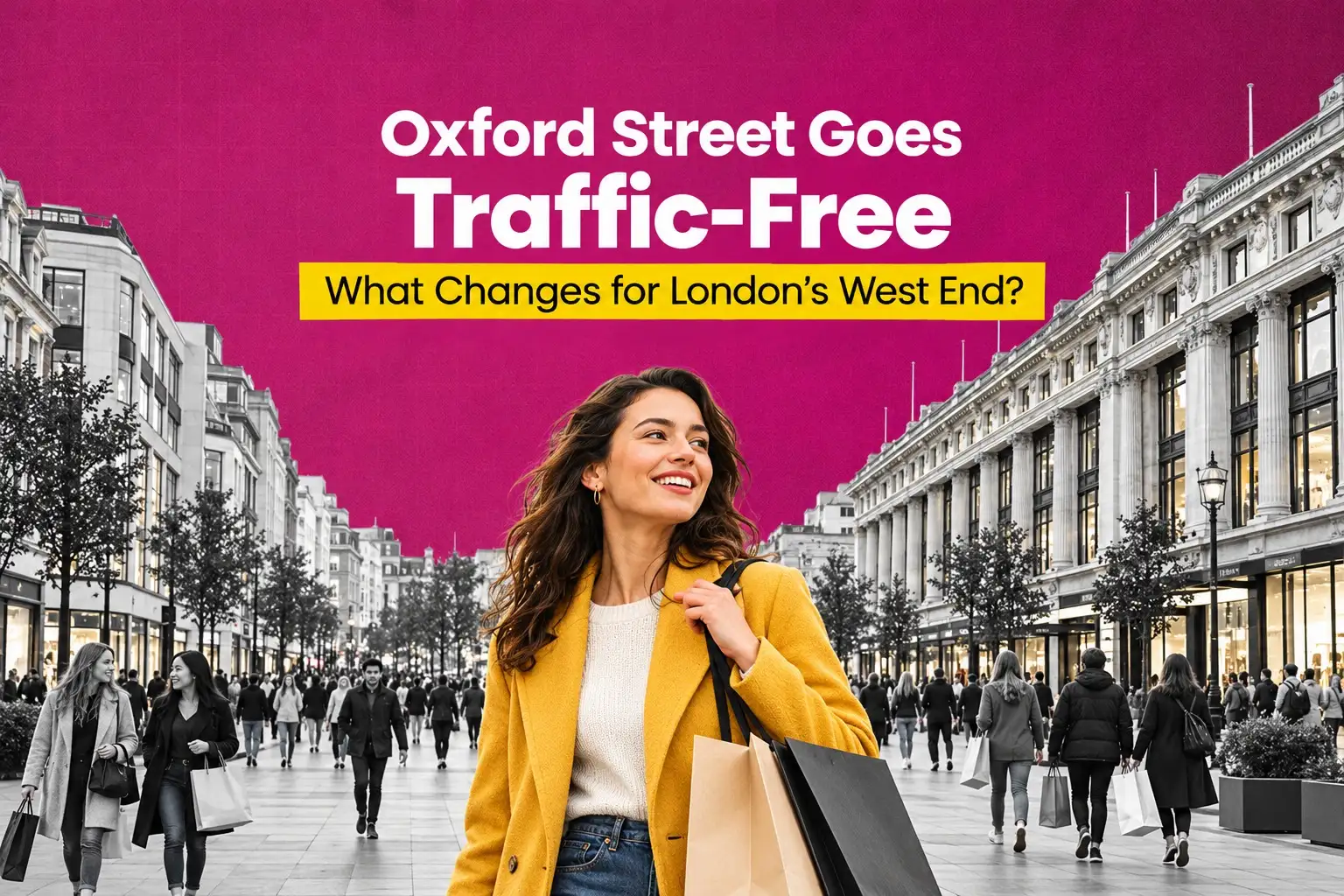
Almost one kilometre of London’s famous shopping street is now closed to traffic, marking a new chapter for West End businesses, workers and visitors ahead of Christmas.
On 26 October 2026, the traffic free Oxford Street zone opened between Orchard Street and Great Portland Street, giving shoppers and visitors more room to walk, explore and enjoy one of London’s busiest retail destinations.
Mayor of London Sadiq Khan called the launch “a truly momentous occasion for the capital”, highlighting its potential to support jobs, economic growth and a greener London. With Christmas approaching, West End retailers and hospitality venues are preparing for their busiest trading period. But what does Oxford Street pedestrianisation mean for businesses, workers and visitors?
The nearly 1km section between Orchard Street and Great Portland Street is now closed to most vehicles, including cars, buses, taxis, bicycles and scooters. City Hall describes the Oxford Street traffic restrictions as permanent, with vehicles diverted onto surrounding roads.
Some access arrangements remain in place:
Deliveries and servicing: Permitted between midnight and 7 am.
Emergency vehicles: Can access the traffic-free section at any time.
Crossing roads: Several north-south routes remain open, including Duke Street, Stratford Place/Davies Street, Vere Street/New Bond Street, Regent Street and Holles Street/Harewood Place.
Transport for London (TfL) has also diverted buses, with alternative stops on nearby roads including Wigmore Street, Henrietta Place and Cavendish Place. Anyone travelling, cycling or making deliveries in the West End should check the latest route information before setting off.
The traffic-free Oxford Street scheme is the first phase of a wider plan to make the area more pedestrian-friendly and accessible.
Oxford Street attracts around half a million visitors a day, making it one of the UK’s most recognisable shopping destinations. Dee Corsi, Chief Executive of New West End Company, described the launch as one of the most significant moments in the street’s history. She noted that the road dates back to the Roman era and has been a centre for commerce for more than 200 years, and sees the change as a chance to improve the visitor experience and attract more people to the area.
With more space to walk, visitors may stay longer, discover nearby venues and enjoy more of what central London offers. A less congested street could also make busy periods more comfortable for shoppers. The real impact on footfall and local spending will become clearer over time.
While the traffic free Oxford Street plans have created excitement, they also raise practical questions for West End businesses. Westminster City Council has expressed concerns about access, air pollution, street cleaning and public safety, all of which matter to venues that rely on smooth day-to-day operations.
Retailers need reliable deliveries to keep shelves stocked, and restaurants and cafés need customers, suppliers and staff to reach their premises easily. Higher footfall could bring more customers to hospitality venues, especially at weekends and during seasonal shopping periods, but it also means greater demand for staff at busy times.
Corsi has stressed the importance of getting the practical details right so the street remains safe, clean and accessible. The weeks leading up to Christmas will give an early indication of how well the changes work in practice.
Temporary seating and planters are already being introduced, with further improvements planned for 2027, including more than 50 new trees, over 100 seats, two public squares, improved lighting and clearer signage. Feedback from businesses, residents, workers and visitors will help shape future improvements.
At Pioneering People, we see this as an interesting development for hospitality businesses across the West End. More people exploring on foot could mean fuller restaurants and busier cafés. We want the venues we work with to thrive, and a more welcoming Oxford Street could help them do exactly that.
But a successful high street also depends on the people who keep businesses running. Many hospitality and retail workers, including the temporary workers we place, rely on public transport to reach their shifts. With bus routes diverted, getting to work needs to stay straightforward and reliable, especially for early starts, late finishes and busy weekend shifts.
There may be environmental and community benefits too. Less vehicle traffic could mean a calmer street and improved air quality, while increased visitor activity may create more flexible, paid work for people looking for jobs in central London.
We’ll be watching closely to see how the new arrangements work for venues, workers and visitors alike.
1. Is Oxford Street traffic free now?
Yes. Oxford Street became traffic free on 26 October 2026. The section between Orchard Street and Great Portland Street is closed to most vehicles, creating nearly one kilometre of pedestrian-friendly space in central London.
2. Which part of Oxford Street is pedestrianised?
It runs for almost one kilometre between Orchard Street and Great Portland Street, covering a major shopping area in London’s West End.
3. Are buses still running on Oxford Street?
Not through the pedestrianised section. Several routes have been diverted, with alternative stops on nearby streets. Check TfL for updated routes.
4. Can delivery vehicles access Oxford Street?
Yes. Delivery and servicing vehicles can access the traffic-free section between midnight and 7 am. Emergency vehicles can access it at any time.
5. How will Oxford Street pedestrianisation affect local businesses?
It could attract more visitors to shops, restaurants and cafés. Businesses will also need to adapt to delivery restrictions, transport diversions and changing staffing demands.
Thursday wants singles to put down their phones and meet in real life. Through e

Nearly one million young people in the UK are currently not in education, employ

Every year, something strange happens across the UK in early September. The nigh