Temporary Jobs with No Experience in the UK: How to Get Your First Shift
When your first job seems overwhelming, and all the jobs are looking for experie
August, 27, 2026

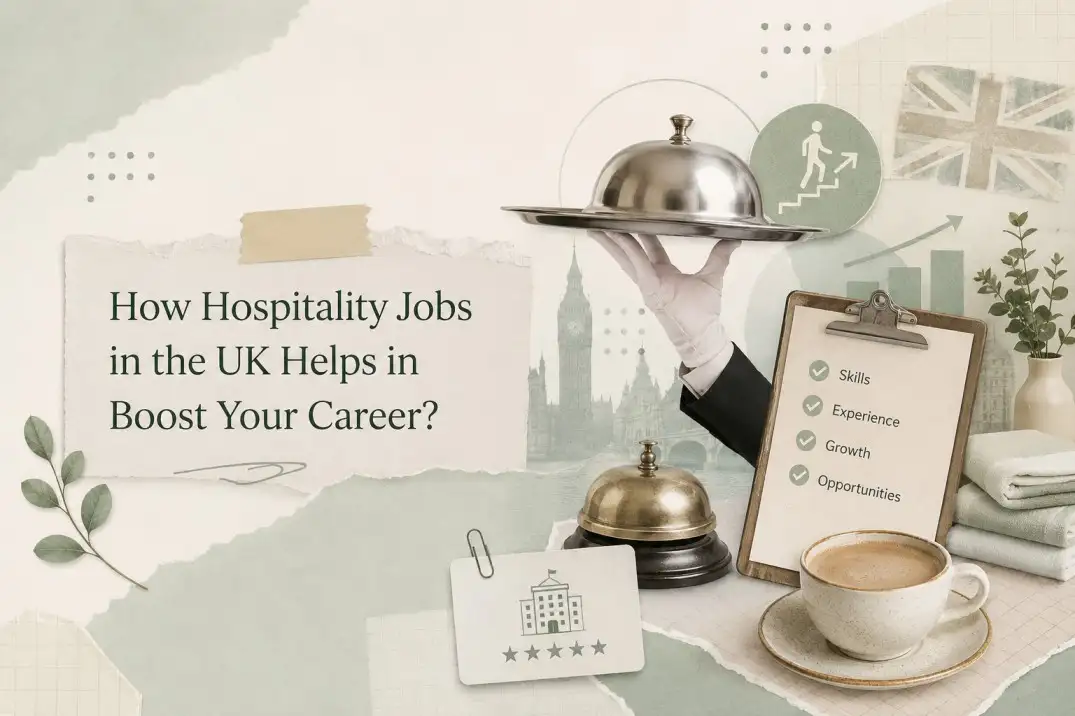
Hospitality jobs in the UK are far more than a stepping stone or a way to fill time between "real" career moves — they are, for many people, the real career move. The UK hospitality industry employs over 3 million people and generates billions in economic output each year, and the skills it builds are genuinely hard to find anywhere else.
If you've ever wondered whether taking a hospitality role will actually move your career forward, the short answer is yes and faster than most people expect. Whether you're starting, switching industries, or looking to climb quickly within a growing sector, the opportunities are there if you know where to look.
This guide breaks down what the hospitality industry actually offers career-wise, what skills you'll develop, and how to position yourself for growth from day one.
A hospitality job in the UK covers any role within the food, drink, accommodation, events, and tourism industries. That's a wider net than most people realise. It includes front-of-house restaurant staff, hotel receptionists, event coordinators, bar managers, housekeeping supervisors, concierge professionals, catering managers, and everything in between.
What unites all of these roles is a focus on the guest or customer experience. Hospitality is fundamentally about people serving them well, anticipating their needs, and delivering consistent quality under pressure. That people-first orientation is what makes skills developed in hospitality so transferable across industries.
The UK hospitality sector spans everything from independent local restaurants and boutique hotels to global chains, luxury resorts, event management companies, and corporate catering operations. Entry points exist at every level, and progression for people who perform well tends to happen quickly.
The UK is one of the world's most active hospitality markets. London alone is consistently ranked among the top global cities for restaurants, hotels, and nightlife, and that standard ripples out across Edinburgh, Manchester, Bristol, Birmingham, and beyond. Working within this environment gives you access to high standards, diverse clientele, and genuine career infrastructure training programmes, progression frameworks, and industry networks that support long-term growth.
Unlike some industries where promotions take years, and progression is linear, hospitality rewards performance quickly. A motivated individual can move from waiting tables to floor supervisor to assistant manager within two to three years at the right employer. That kind of pace is rare in most career paths.
For people who came into hospitality thinking it was temporary, many stay precisely because the trajectory turned out to be better than expected.
Spend time in any hospitality role, and you'll leave with a set of skills that translate directly into almost any other professional environment. These include:
Communication — you learn to read people quickly, adapt your tone depending on the situation, and handle difficult conversations without escalating tension. These are the same skills that make great managers, salespeople, and client-facing professionals.
Problem-solving under pressure — hospitality rarely goes to plan. When it doesn't, you fix it fast and keep the customer happy. That ability to stay calm and think clearly in difficult moments is exactly what employers in other sectors pay a premium for.
Time management and multitasking — managing multiple tables, tracking orders, coordinating with kitchen staff, and handling payments simultaneously teaches you a version of prioritisation that desk-based roles rarely replicate.
Leadership and teamwork — even junior hospitality roles involve working closely with a team, often under significant pressure. Senior roles involve leading those teams. Both build leadership capability in a way that classroom training simply can't.
Customer service excellence — the gold standard in hospitality customer experience translates directly into corporate, retail, healthcare, and service sector roles. Knowing how to deliver genuine service, not scripted, mechanical service, sets you apart.
One of the most underappreciated aspects of hospitality careers is how quickly motivated individuals can advance. Many general managers and operations directors in the UK hotel and restaurant sector started in entry-level roles. The industry has a culture of promoting from within, largely because operational knowledge the kind you can only get by working on the floor is genuinely valued at senior levels.
If you're willing to take on additional responsibility, show initiative, and commit to learning, a hospitality employer will often invest in your development. That might mean funded training, management programmes, or mentoring from senior staff.
Hospitality qualifications and experience carry international weight. A background in UK hospitality, particularly with premium hotel chains, Michelin-starred restaurants, or large event operators, is recognised and respected across Europe, the Middle East, North America, and beyond.
If your longer-term ambition involves working internationally, building your career in the UK first gives you a strong platform. Many global hotel groups actively recruit UK-trained talent for roles abroad, and several offer structured international relocation programmes for high performers.
Hospitality is one of the most resilient employment sectors in the UK. People eat out, stay in hotels, attend events, and travel regardless of economic conditions; the scale may shift, but the demand doesn't disappear. For workers, this translates into consistent employment availability and, at skilled levels, genuine competition for talent that puts you in a strong negotiating position.
The UK is currently experiencing a well-documented skills shortage in hospitality, meaning that experienced, skilled workers are in high demand and are commanding better pay and conditions than in previous decades.
Not all hospitality roles offer the same career trajectory. The positions with the strongest growth potential tend to be those with operational breadth roles where you're exposed to multiple aspects of the business rather than a narrow function.
Hotel roles provide one of the clearest structured career paths in UK hospitality. Starting as a receptionist, rooms division coordinator, or food and beverage assistant, you can progress through supervisor and assistant manager roles into hotel management. Large hotel groups typically offer formal management development programmes that accelerate this progression.
The breadth of operations in a hotel front office, food and beverage, housekeeping, events, revenue management, and more means that moving between departments builds a rounded skill set that qualifies you for senior operations roles relatively quickly.
The restaurant industry rewards people who understand the full operation: kitchen liaison, service standards, staff scheduling, cost control, and customer experience. A strong general manager in a quality restaurant carries skills in people management, financial oversight, and operational logistics that are directly applicable in broader management roles.
Many restaurant operators are also expanding across multiple sites, which creates area manager and regional director opportunities for proven performers.
Events roles develop project management, logistics, budget oversight, and stakeholder communication skills at pace. Working in event coordination from corporate conferences to weddings and large-scale hospitality events gives you hands-on experience managing complex, deadline-driven projects with high visibility and little room for error.
These skills are directly transferable into project management, marketing, and operations roles across industries, making event hospitality an excellent platform for career pivoting as well as internal growth.
Contract catering and food service management in workplaces, hospitals, schools, and large corporate venues offers particularly strong career infrastructure. Large catering companies typically have well-defined career ladders, national operations, and management training programmes that give ambitious individuals a clear route from site supervisor to operations management.
Getting a hospitality job is one thing. Getting the most out of it for your career is another. Here's how to make sure you're building, not just working:
Be visible about your ambitions. Most good hospitality employers are looking to develop internal talent, but you need to make your goals known. Tell your manager where you want to be in two years and ask what you need to do to get there.
Seek cross-departmental experience. Breadth of knowledge is what separates candidates for management roles. If you're in a hotel, volunteer to cover different departments. If you're in a restaurant, understand the kitchen operation as well as the floor.
Invest in relevant qualifications. Hospitality management degrees, Level 3–5 apprenticeships, revenue management courses, and food safety certifications all strengthen your CV and signal commitment to the industry.
Build your professional network. UK hospitality has a strong professional community. Industry events, trade associations like UKHospitality, and platforms like LinkedIn put you in contact with leaders and peers who can open doors and share knowledge.
Document your achievements. When you improve a process, exceed a sales target, or manage a challenging situation well, write it down. A track record of measurable contributions is what makes your case when you go for the next role.
Without question. The narrative that hospitality is a low-skill, low-reward sector is outdated and, frankly, inaccurate. General managers of mid-sized UK hotels regularly earn £40,000 to £70,000 per year. Senior event managers, revenue directors, and food and beverage directors in premium venues often exceed those figures. At the luxury end of the market, executive-level roles command six-figure packages.
Beyond salary, the hospitality industry offers something less common in office-based careers: a direct, tangible connection between your effort and its impact. When a guest has an exceptional experience because of your team's work, that feedback is immediate and real. For many people, that sense of direct contribution to quality is what keeps them in the industry for the long term.
Finding the right hospitality role one that genuinely aligns with your career goals rather than just filling your schedule requires more than scrolling job boards. That's what Pioneering People is built to do.
We work with hospitality businesses across the UK to match professionals with roles that fit their skills, ambition, and preferred working environment. Whether you're looking for your first hospitality position, a step up into management, or a move into a specialist area like events or hotel operations, our team understands the industry well enough to make that match meaningfully.
We're not just connecting people with jobs; we're connecting people with the right next step in their career.
A hospitality job in the UK can do more for your career than most people give it credit for. It builds skills that travel across industries, offers faster progression than many professional sectors, and connects you to a global industry that values UK experience highly.
Whether you're entering the workforce, making a career change, or looking to grow within hospitality itself, the opportunities are substantial. The key is treating every role as a building block, developing deliberately, building relationships, and positioning yourself for the next step from the moment you start.
Pioneering People is here to help you find the role that starts or accelerates that journey.
Career prospects in UK hospitality are strong for motivated individuals. The industry promotes from within frequently, and roles in hotel management, events, and food and beverage operations can progress from entry level to senior management within three to five years at the right employer.
Hospitality jobs build communication, customer service, team leadership, time management, and problem-solving skills. These are transferable across a wide range of industries, making hospitality experience valuable far beyond the sector itself.
Salaries vary by role and location. Entry-level hospitality workers typically earn between £10 and £13 per hour. Supervisory and management roles range from £25,000 to £45,000 annually, while senior and executive-level positions in premium venues can exceed £60,000 per year.
Yes. The UK hospitality industry is large, resilient, and currently experiencing a skills shortage, which creates strong demand for experienced professionals. For people who develop their skills and take on responsibility, long-term career and salary growth is very achievable.
Many entry-level hospitality roles such as front-of-house servers, hotel receptionists, and catering assistants require no prior experience. Employers typically provide on-the-job training. Starting in any customer-facing role and demonstrating reliability, attitude, and willingness to learn is the most common route in.

When your first job seems overwhelming, and all the jobs are looking for experie
August, 27, 2026
Ever scrolled past a "Temporary Retail Assistant Needed" post and wondered if it
August, 27, 2026
Temporary staffing is a challenge for UK businesses, especially during busy seas
August, 27, 2026